Six Months of Rationing and the Crisis Deepens
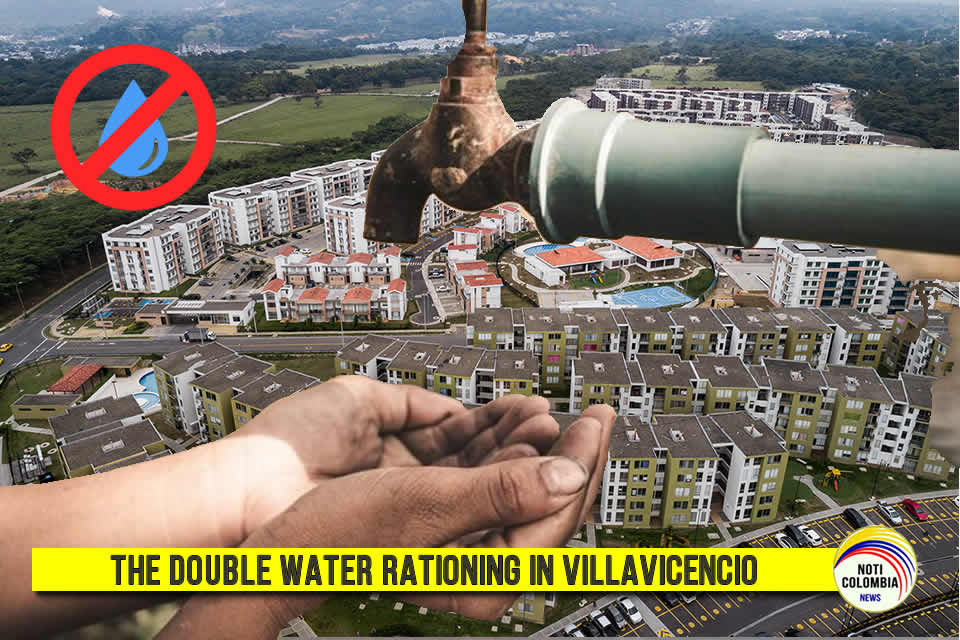
Since June 2025, the city of Villavicencio has faced one of the most severe drinking water rationing periods in its recent history. This is not a temporary contingency or a minor disruption. It is a prolonged, sustained, and worsening crisis that has now resulted in a double rationing of an essential public service.
On one hand, regular service from the aqueduct is no longer continuous. Water reaches neighborhoods by sectors every two, three, or even four days, for one or two hours—when it arrives at all. On the other hand, the alternative mechanism intended to mitigate the emergency—water delivery by tanker trucks—has become increasingly irregular, creating a second layer of rationing with entire days, and even several consecutive days, without effective supply.
This combination has forced large areas of the city to survive with an average of approximately one hour of water per day, clearly insufficient to meet basic needs for hygiene, food preparation, and sanitation.
What is happening—and what may still happen—is serious and dangerous. This problem should not be turned into a political battle. While it is true that Mayor Baquero bears responsibility, the problem dates back many years, marked by alleged negligence and rampant corruption.
A Broken Promise That Deepens Public Distrust
After the climatic events and damage that occurred in June 2025, authorities publicly announced that normal service would be restored within a maximum of three months. That deadline passed. The solution did not arrive.
Six months have now gone by, and far from improving, the service has deteriorated. There is no reliable timetable for normalization, nor clear technical information that allows citizens to understand when and how the crisis will be resolved. This prolonged lack of results has eroded institutional trust and made uncertainty a permanent part of daily life.
This assessment is not intended to provoke political confrontation, but rather to objectively document the failure to meet announced deadlines and the cumulative effects on the population.
The Most Severe Impact: Residential Complexes and Apartment Buildings
Villavicencio has experienced significant vertical growth. In many newer areas—not traditional neighborhoods built decades ago—hundreds or thousands of people are concentrated in small spaces within modern residential complexes.
Buildings of seven, eight, nine, or more stories house older adults, young children, and people with reduced mobility. When there is no aqueduct service and tanker trucks do not arrive, the situation becomes critical. Carrying water upstairs is not feasible, there are no neighborhood support networks like those in open communities, and there are no improvised solutions available.
The impact is not abstract. Daily life is paralyzed, and human dignity is compromised.
“Potable” Water, but Not Trustworthy
Although the water that does arrive is officially classified as potable, residents have reported slight turbidity and sediment in the supplied water. Even if these signs are minor, they are enough to generate reasonable and legitimate distrust regarding direct consumption.
As a result, thousands of families have chosen not to drink tap water, turning instead to bags, bottles, and large containers of bottled water. This creates an additional, unavoidable expense, added to increasingly high utility bills, despite the intermittent and precarious nature of the service.
In practice, the crisis has shifted the cost of the problem onto households, while the only sector clearly benefiting is bottled water distributors.
Economic Impact and Inequality
The rising cost of accessing water has hit middle- and low-income households especially hard. Paying the utility bill, purchasing drinking water, and in many cases buying containers for improvised storage represents an unsustainable economic burden for many families.
This situation deepens inequality: those who can afford it protect themselves; those who cannot are left exposed.
Public Health Risks: A Preventive Warning
Villavicencio has a warm, humid climate, with average temperatures between 29 and 32 degrees Celsius (84–90°F). The lack of sufficient and continuous water makes complete and ongoing personal hygiene difficult, which can encourage the spread of fungi, mites, skin conditions, and other preventable health risks.
Older adults and young children are the most vulnerable. This warning is not meant to create panic, but to responsibly and preventively highlight real and foreseeable risks if the situation continues.
Public health prevention requires action before consequences appear, not after.
A Structural Problem with Known Precedents
The current collapse of the aqueduct cannot be understood as an isolated event. Villavicencio has endured decades of unfinished projects, failed contracts, technical deficiencies, and alleged irregularities in initiatives meant to guarantee water supply.
Press reports, technical studies, and oversight agency findings document millions of dollars invested without effective structural solutions. This historical background is widely known and needs no further elaboration here. It is enough to state that the current crisis is the cumulative result of misguided decisions sustained over time.
Responsibilities must be investigated and sanctioned, but the priority today must be to prevent a social and public health disaster in the present.
The National Importance of Villavicencio and Meta
This is not a minor or purely local issue. Villavicencio is the gateway to Colombia’s Eastern Plains, and Meta is a strategic department for the national economy, including agricultural production, oil, gas, and essential food supplies.
A city with such economic and social weight cannot go months without reliable access to drinking water. Villavicencio’s social stability has implications that extend beyond municipal and departmental boundaries.
Conclusion: Urgency Without Alarmism, Action Without Delay
This document is a respectful, objective, and preventive call. It does not seek to generate unjustified alarm, but to place on record a situation that is already alarming due to its duration, worsening conditions, and cumulative effects.
Three months were promised. Six have passed. Service has not only failed to normalize; it has become more expensive, more irregular, and less reliable.
The prolonged lack of drinking water poses a real risk to public health, the economy, and social cohesion. There is still time to prevent more serious consequences, but the margin is narrowing.
Villavicencio is not asking for privileges or special treatment. It demands the minimum guarantee of a dignified life: continuous, safe, and accessible water.
Because without water, there is no health.
Without water, there is no life.
Acerca del autor